100 Milliseconds to Midnight: What's Really Happening in the Programmatic Auction Before Your Ad Gets a Shot
100 Milliseconds to Midnight: What's Really Happening in the Programmatic Auction Before Your Ad Gets a Shot
By the time a webpage finishes loading on someone's screen, your ad has either won or lost a bidding war you probably didn't even know was happening. We're talking about a window shorter than the blink of an eye — under 100 milliseconds — where dozens of variables collide, algorithms fire, and budgets either get put to work or get quietly torched.
Most US advertisers running programmatic campaigns have a rough idea of how real-time bidding works. You set a bid, you target an audience, your ad shows up. Simple enough, right? Except that's about as accurate as saying a NASCAR race is just "driving in circles." What's actually happening under the hood is a lot messier, a lot faster, and a lot more consequential for your bottom line.
Let's slow it down.
The Auction Floor Is More Crowded Than You Think
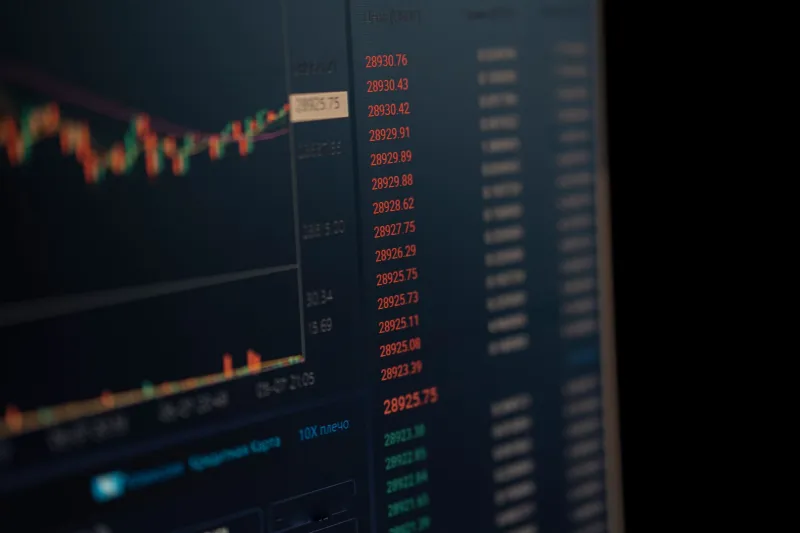
Imagine a packed stock exchange floor — traders shouting, signals flying, prices shifting in real time. Now compress that entire scene into the span of a finger snap. That's roughly the environment your bid enters when a user lands on a page that serves programmatic ads.
The moment a page begins to load, the publisher's ad server sends out a bid request. That request fans out across multiple demand-side platforms (DSPs), ad exchanges, and supply-side platforms (SSPs) simultaneously. Each one is evaluating your campaign against hundreds of other advertisers' campaigns, weighing bid price, audience match, ad quality score, historical performance, and a dozen other signals — all before the page is visible to the user.
Here's what most advertisers miss: you're not just competing on price. You're competing on the entire profile of your campaign. A lower bid from a highly trusted advertiser with strong historical click-through rates can beat a higher bid from a campaign with a spotty track record. The auction isn't purely financial. It's reputational, too.
Header Bidding Changed the Game — But Not Everyone Got the Memo
For years, publishers used a system called the "waterfall" — ad inventory was offered to networks one at a time, in a predetermined priority order. If the first network passed, it went to the second, and so on. The problem? Publishers left money on the table, and advertisers in lower-priority slots got garbage inventory.
Header bidding blew that model up. Instead of a sequential handoff, header bidding lets multiple buyers bid on the same impression at the same time. The highest qualifying bid wins. Publishers make more money, and in theory, advertisers get a fairer shot at premium inventory.
In theory.
The reality is that header bidding has also introduced serious complexity. Publishers now juggle multiple header bidding wrappers, each connecting to a different set of SSPs. Some of those SSPs are sending your bid request to the same exchange through multiple paths — a phenomenon called bid duplication. You think you're placing one bid. You might actually be bidding against yourself through five different pipes without knowing it. That inflates prices and distorts your win rate data in ways that make your campaign look worse than it actually is.
Supply-Path Optimization: The Shortcut Most Advertisers Aren't Taking
Supply-path optimization (SPO) sounds like something your IT department deals with. It's not. It's one of the most practical levers US advertisers can pull to stop overpaying for impressions.
Here's the deal: every impression travels through a chain — publisher to SSP to exchange to DSP to your campaign. Every link in that chain takes a cut. Some paths have two middlemen. Some have five. You're paying the same CPM either way, but the publisher is seeing wildly different revenue depending on which path your bid traveled. And the more intermediaries involved, the more your data gets degraded, the more your targeting accuracy slips, and the more your budget disappears into fees.
SPO means actively choosing shorter, cleaner supply paths — working with your DSP to identify which SSPs consistently deliver the best match rates and lowest fees for your specific audience targets. It's not glamorous work, but advertisers who've done it report meaningful drops in effective CPM and improvements in viewability. Think of it like taking the highway instead of the surface streets — same destination, less wasted time and gas.
Bid Shading: The Algorithm Working Against You (Unless You Understand It)
When programmatic auctions shifted from first-price to second-price models — and then to a hybrid mess in between — bid shading emerged as the industry's answer to overpaying. The idea is straightforward: rather than bidding your full max CPM, your DSP's algorithm shades your bid downward to the lowest price it predicts will still win the auction.
Sounds great for your budget, right? Sometimes. But bid shading models are only as good as the data feeding them. If your DSP is working with stale or limited auction data for a particular inventory source, its shading model might undercut your bid just enough to lose impressions you actually needed. You end up with a lower average CPM on paper and a frustratingly low win rate in practice.
The fix isn't to turn off bid shading — it genuinely saves money when it's calibrated well. The fix is to audit which inventory sources your shading model is underperforming on, and either adjust floor price settings or flag those sources for manual review.
Your Programmatic Audit Checklist
If any of the above made you want to log into your DSP and start poking around, good. Here's a practical starting point for auditing your programmatic setup before your next campaign cycle:
-
Check for bid duplication. Ask your DSP to show you how many times the same impression is appearing in your bid stream from different SSPs. Anything above a 15–20% duplication rate is worth investigating.
-
Map your supply paths. Request a supply-path report from your DSP. Identify your top five SSPs by spend and compare their fee structures, match rates, and viewability scores side by side.
-
Review your bid shading win rates by inventory source. If certain publishers or exchanges show a pattern of low win rates despite competitive bids, your shading model may be miscalibrated for that source.
-
Audit your floor price settings. Many publishers use dynamic floor pricing. If your bids are consistently landing just below floor thresholds, you're losing winnable auctions. A small upward adjustment can unlock significant impression volume.
-
Look at your auction type mix. Are you buying predominantly in first-price or second-price environments? Your bidding strategy should differ meaningfully between the two. Treating every auction the same is a quiet budget killer.
-
Benchmark your effective CPM against industry averages. Tools like MediaRadar or your DSP's benchmarking reports can tell you whether you're paying a premium for inventory your competitors are buying more efficiently.
The 100 Milliseconds That Define Your Campaign
Programmatic advertising rewards the advertisers who understand what's happening in the dark — the fractions of a second before a page renders, the invisible handshakes between platforms, the algorithmic decisions that determine whether your budget builds your business or just funds someone else's margin.
You don't need to become a data scientist to compete here. You need to ask the right questions of your DSP, clean up your supply paths, and stop treating the auction like a black box you can't touch. The competitors who are quietly crushing you in these auctions? They're not necessarily outspending you. They're just clicking smarter.